Posts

Showing posts with the label Risk Management

From AI Potential to Practical Impact: How COMPASS by CyRAACS is Transforming Risk Management Audits

Image
 In a world where compliance demands are rising, cyber threats are evolving daily, and businesses are expected to do more with less, how can organizations keep their audit and risk management practices sharp, scalable, and future-ready? The answer lies in one powerful shift: AI-Powered Audits. And at the heart of this transformation is COMPASS , CyRAACS innovative platform designed to reimagine how audits are approached, executed, and evolved. But let’s back up for a second... What if we told you that audits no longer need to feel like painful annual chores, full of spreadsheets, scattered checklists, and time-consuming manual reviews? What if audits could instead become real-time, insightful, strategic tools,   constantly running in the background, adapting to risk changes, and offering visibility you can act on? Let’s explore how AI, combined with CyRAACS expertise and the COMPASS platform, is making that a reality. Why Traditional Audits Fall Short in Modern Risk Man...

Essential Business Continuity Management (BCM) Best Practices

Image
1. Conduct Business Impact Analysis (BIA) The first step in a successful BCM program is conducting a Business Impact Analysis (BIA). This analysis helps organizations understand how disruptions can affect operations. A BIA identifies critical business functions, quantifies potential losses, and determines the acceptable downtime for each function. For FinTech companies and cybersecurity firms like CyRAACS, understanding these impacts ensures better planning and rapid recovery in the face of cyber incidents or operational failures. 2. Develop a Risk Assessment Framework A solid risk assessment framework allows businesses to systematically evaluate threats and vulnerabilities. It includes identifying internal and external risks, evaluating their likelihood, and assessing their potential impact. In a dynamic threat landscape, businesses need to adopt a risk-based approach to manage evolving cybersecurity challenges. 3. Establish a Clear Business Continuity Management (BCM) Policy ...

Why Manual Risk Assessments Are Outdated in the Age of AI

Image
 In today’s fast-paced, technology-driven world, businesses face an ever-evolving landscape of risks. Cybersecurity threats, regulatory changes, and operational vulnerabilities are just a few of the challenges organizations must navigate to stay secure and compliant. Traditionally, companies have relied on manual risk assessments to identify, evaluate, and mitigate these risks. However, as the infographic from Cyraacs highlights, manual risk assessments are becoming increasingly outdated in the age of artificial intelligence (AI). Let’s dive into the nine key reasons why manual processes are no longer sufficient and explore how AI is revolutionizing risk management. 1. Limited Visibility: A Static Snapshot Isn’t Enough Manual risk assessments often provide a static snapshot of an organization’s risk posture at a given moment. While this might have been sufficient in the past, today’s dynamic threat landscape demands real-time visibility. Cyberattacks, for instance, can evolve rapid...

Mastering the Essentials of Risk Management for Business Success

Image
 In today’s volatile business environment, mastering the essentials of risk management is crucial for sustaining and growing a successful enterprise. Effective risk management not only protects your business from unforeseen threats but also positions it to capitalize on opportunities. This comprehensive guide will walk you through the critical components of risk management, focusing on communication and consultation, scope of definition, and the vital processes of risk assessment, including risk identification, risk analysis, risk evaluation, risk treatment, and continuous monitoring and review. Communication and Consultation Communication and consultation are foundational to effective risk management. These processes ensure that all stakeholders are aware of potential risks and their roles in mitigating them. Transparent communication fosters a culture of risk awareness and proactive management, while consultation engages stakeholders in the risk management process, leveraging the...

5 Steps to a Bulletproof Risk Assessment: Protect Your Business from the Inside Out

Image
   In today's dynamic and ever-evolving business landscape, threats lurk around every corner. From cyberattacks and data breaches to operational disruptions and financial losses, safeguarding your business from an unforeseen storm requires a proactive approach. This is where the mighty risk assessment steps in, acting as your armor against potential pitfalls. But conducting a risk assessment isn't just about ticking boxes on a checklist. It's about deeply understanding your vulnerabilities, prioritizing risks, and crafting a strategic plan to mitigate them . To help you navigate this crucial process, we've compiled a roadmap of 5 essential steps to build a bulletproof risk assessment that protects your business from the inside out. Step 1: Lay the Foundation – Define Your Scope and Objectives Before diving headfirst into the assessment, set clear boundaries and goals . What are you trying to achieve? Are you focusing on specific areas like cybersecurity or operational ...

Why ISO 27001 is the Backbone of a Robust Information Security Management System?

Image
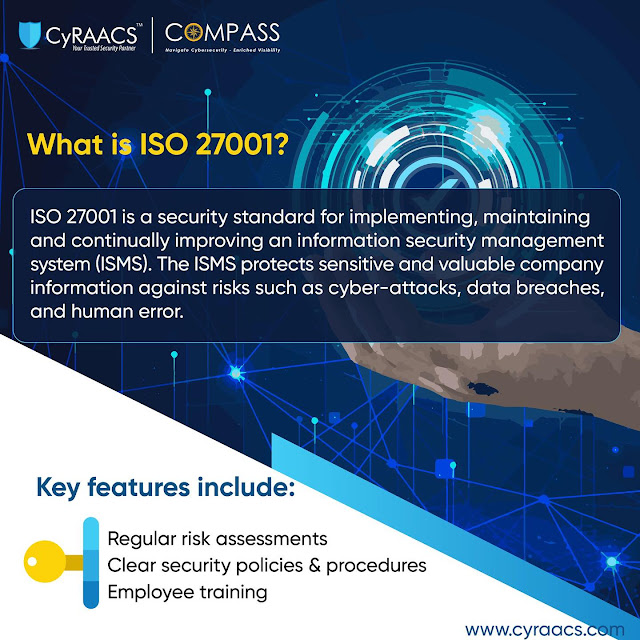
 In today's digital world, data is the lifeblood of organizations. Protecting this valuable asset requires a proactive and comprehensive approach to information security. That's where ISO 27001, the international standard for information security management systems (ISMS), comes in. What is ISO 27001? ISO 27001 is a set of best practices and guidelines for establishing, implementing, maintaining, and continuously improving an ISMS. It provides a framework for organizations to identify, assess, and manage information security risks. Understanding ISO 27001 ISO 27001 is an international standard for Information Security Management Systems developed by the International Organization for Standardization (ISO) and the International Electrotechnical Commission (IEC). It provides a systematic approach to managing sensitive company information, ensuring its security, and addressing potential vulnerabilities and risks. Why is ISO 27001 Important? Implementing ISO 27001 brings numerous b...